Professional Drone LiDAR Survey Services Ireland

Ireland's pioneer in drone LiDAR surveys since 2016 - Survey-grade accuracy delivered in 2 working days

  • High-Precision 3D Mapping and Survey Data Collection
  • 75% Savings compared to traditional surveys
  • Professional LiDAR Mapping for Construction, Mining, and Forestry
  • Rapid Large-Area Surveying and Digital Terrain Modelling
  • Advanced Drone LiDAR Technology and Real-Time Processing
  • Create Accurate Measurements and calculate the distance between data points

When Your Site is Too Complex for Traditional Surveys

Overgrown sites, restricted access, dense vegetation – our drone LiDAR survey technology delivers bare-earth DTMs where standard surveying methods fail. 10+ years of experience across Ireland’s most challenging terrain.

DJI RC Plus on Tripod ready for Drone LiDAR Survey with M300 and L1
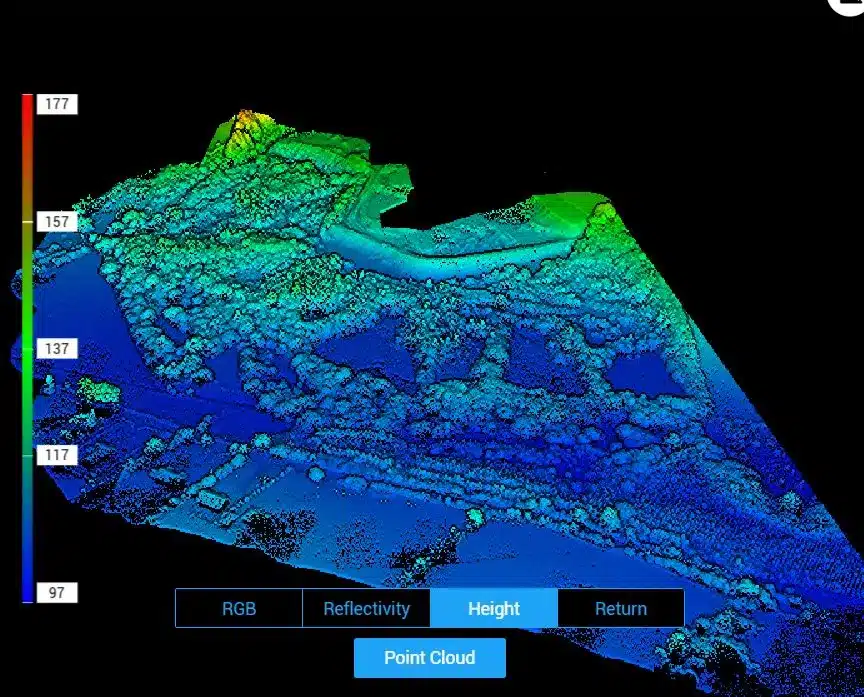
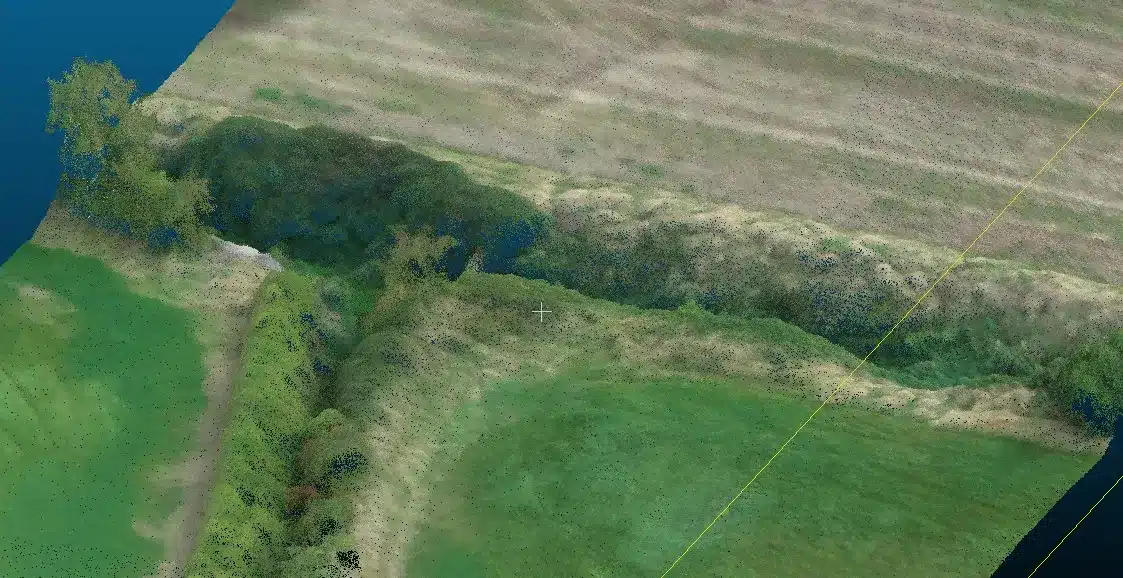
Drone Lidar Survey Slope Analysis
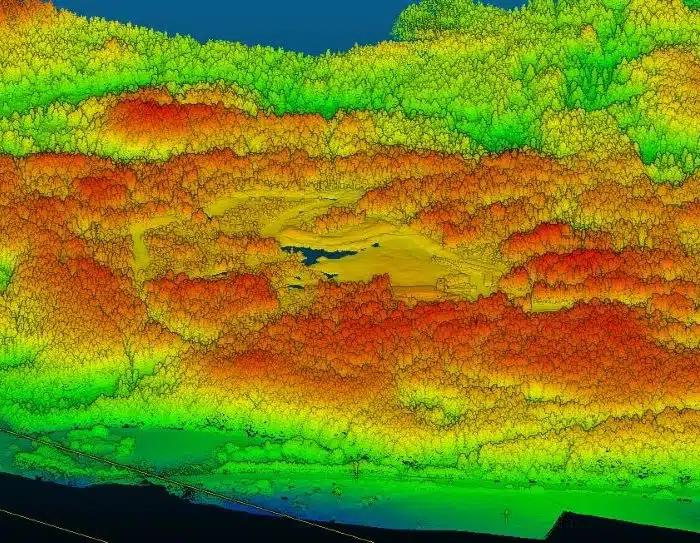
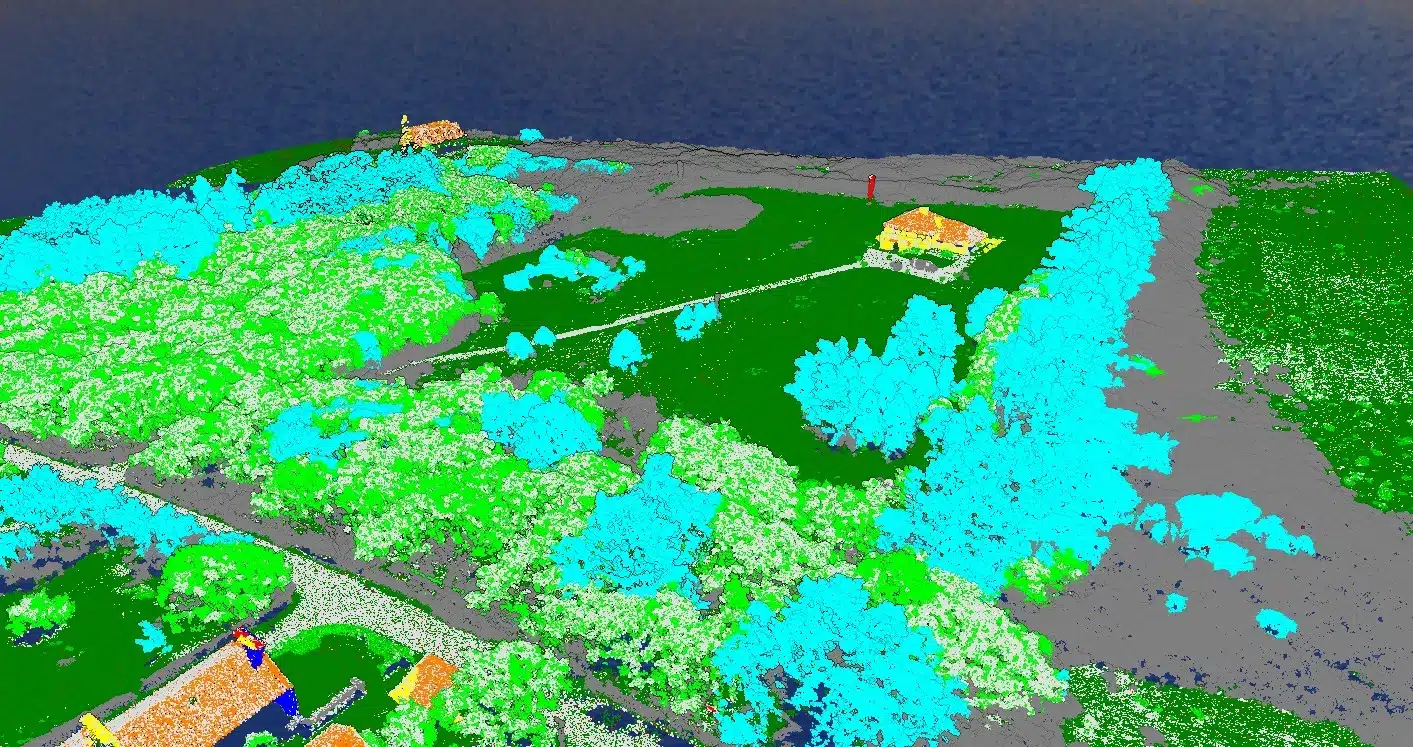
LiDAR Tree Canopy

What is a Drone LiDAR Survey?

Drone LiDAR surveying uses laser pulses (up to 500,000 per second) mounted on aerial platforms to capture accurate 3D terrain data. Unlike photogrammetry, LiDAR penetrates vegetation canopy to reach bare earth – essential for overgrown sites, forestry projects, and infrastructure corridor mapping.

Our systems integrate GPS/GNSS and IMU positioning to deliver georeferenced point clouds with ±5cm accuracy, verified through ground control points.

When You Need Drone LiDAR Survey (Not Standard Photogrammetry):

**Vegetation Penetration Required**
– Forestry sites with dense tree canopy
– Overgrown greenfield development sites
– Summer surveys where the grass exceeds 30cm
– Archaeological sites under vegetation cover

**Restricted Access Environments**
– Railway corridors and motorway edges
– Hazardous industrial sites
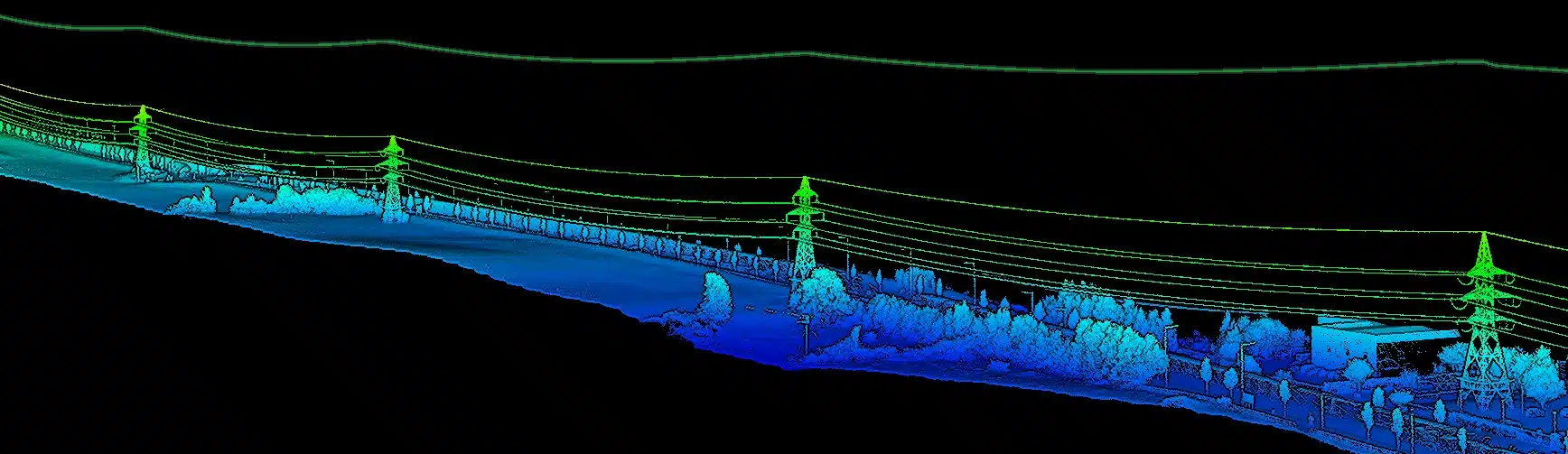
– Power line transmission corridors
– Sites with safety restrictions

**Engineering-Grade DTMs Required**
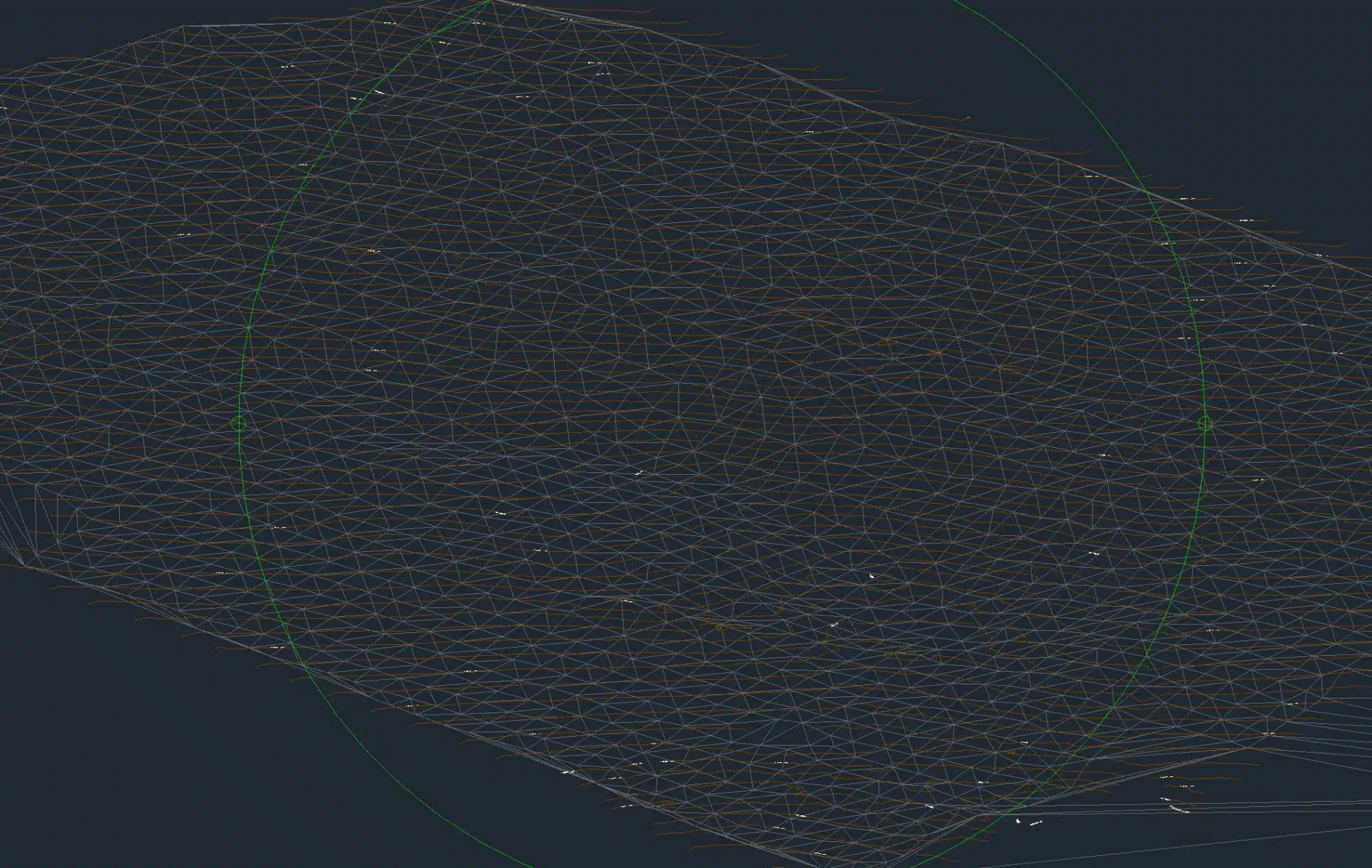
– CAD-ready contours for design work
– Volume calculations for earthworks
– Slope analysis for stability assessments
– Infrastructure planning and permitting

LiDAR Survey Deliverables

The most common deliverables clients request are:

  • Point Clouds
  • Digital Terrain Model
  • Contours – Varying Intervals

Industries Using Our Drone LiDAR Survey Services

Construction & Development
Survey greenfield sites for planning applications. Monitor earthworks progress. Verify cut/fill volumes. CAD-ready contours for engineering design.
Learn about drones in construction

Renewable Energy
Wind farm site assessment beneath forest canopy. Solar farm terrain modelling. Power line corridor vegetation management. Access road planning.

Forestry & Agriculture
Forest inventory and tree height calculations. Timber volume estimation. Drainage planning. Precision agriculture terrain analysis.

Infrastructure & Engineering
Railway corridor mapping. Road widening surveys. Bridge approach surveys. Quarry stockpile volumetrics.
View our infrastructure case studies

Environmental & Archaeology
Flood risk modelling with bare-earth DTMs. Coastal erosion monitoring. Archaeological feature detection. Habitat mapping.

Why Drone LiDAR Delivers Results Traditional Surveys Can't

The challenge: Your site is overgrown, access is restricted, or dense vegetation is hiding the ground you need to map. Traditional surveys fail. Standard drone photogrammetry only captures what it can see from above.

The solution: LiDAR cuts through the canopy.

While photogrammetry relies on visible surfaces, LiDAR uses laser pulses that penetrate vegetation – up to 500,000 points per second. Each pulse records multiple returns as it passes through tree branches, undergrowth, and grass before finally reaching bare earth. The result? A survey-grade point cloud that reveals the true ground surface beneath even the densest forest cover.

Real-world applications where LiDAR proves essential:

Forestry & Renewable Energy Sites
Map terrain beneath mature tree canopy for wind farm planning or forest inventory. Calculate individual tree heights while simultaneously capturing ground elevations – impossible with standard aerial photography.

Power Line Corridors
Identify vegetation encroachment risks along transmission lines. Our surveys measure clearance distances to within 5cm, enabling proactive maintenance scheduling before outages occur.

Overgrown Development Sites
Survey greenfield sites for planning permission even during the summer months when grass growth exceeds 30cm. Standard photogrammetry would fail; LiDAR delivers accurate DTMs regardless of vegetation height.

Infrastructure Projects with Restricted Access
Map railway corridors, motorway edges, or hazardous industrial sites without putting survey crews at risk. LiDAR captures complete terrain data from safe flying distances.

The accuracy difference:
Our ground-truthed LiDAR surveys achieve ±5cm vertical accuracy across entire sites – verified through properly located ground control points. We’ve surveyed heavily vegetated sites where traditional methods were impossible, delivering CAD-ready contours and breaklines that meet engineering standards.

After 10 years of complex LiDAR projects across Ireland, we know which sites need this technology and which don’t. If your site has dense vegetation, restricted access, or requires bare-earth DTMs for design work, LiDAR is your only reliable option.

Professional and GDPR-Compliant Drone LiDAR Services

Fully Licensed & Insured Drone LiDAR Survey Operations

All our LiDAR surveys comply with EASA regulations, IAA licensing requirements, and GDPR data protection standards. Our LiDAR sensors use laser pulses rather than cameras, eliminating privacy concerns for sensitive sites. Comprehensive insurance coverage and RAMS documentation are included with every project.

DJI M300 with Zenmuse L1 Sensor

Trusted by Ireland’s Leading Organisations

Over 10 years, we’ve delivered drone LiDAR survey services for:
– Major construction firms and civil engineering consultancies
– ESB Networks and renewable energy developers
– Local authorities and government agencies
– Environmental consultants and forestry organisations
– Infrastructure operators (transport, utilities, telecoms)

Media-Recognized Expertise
Regularly featured as Ireland’s drone industry expert on Newstalk, RTÉ, and national media. Current Secretary of Drone Professionals Ireland Association. Committee member, Unmanned Aircraft Association of Ireland.

See recent media appearances

Drone LiDAR FAQs

Learn more about our LiDAR Drone Surveying services:

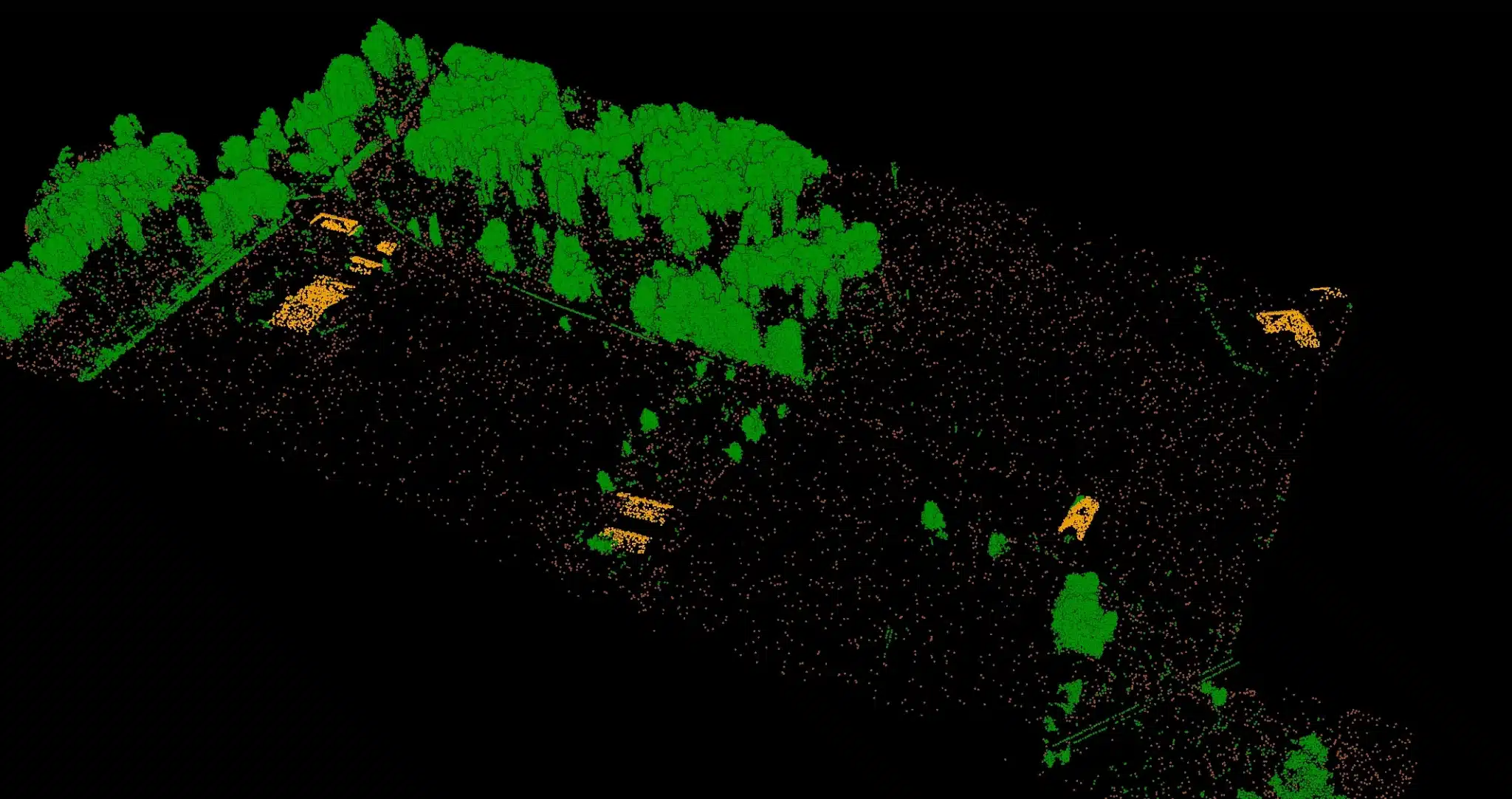
Drone LiDAR point cloud tree seperation
How much does a drone LiDAR survey cost in Ireland?

Drone LiDAR survey pricing typically ranges from €1,500-€5,000 for sites under 50 acres, depending on terrain complexity, access restrictions, and required deliverables (DTM, contours, classified point cloud, CAD extraction). Larger sites are priced per hectare. We provide detailed quotes within 24 hours. Contact us with your site location and requirements.

Our drone LiDAR surveys achieve ±5cm vertical accuracy when properly ground-truthed with control points – meeting engineering survey standards. We verify accuracy across entire sites, not just at control points. This exceeds typical photogrammetry accuracy, especially on vegetated terrain.

Drone LiDAR survey pricing typically ranges from €1,500-€5,000 for sites under 50 acres, depending on terrain complexity, access restrictions, and required deliverables (DTM, contours, classified point cloud, CAD extraction). Larger sites are priced per hectare. We provide detailed quotes within 24 hours. [Contact us] with your site location and requirements.

The accuracy of a drone LiDAR survey depends on several factors, including the area being surveyed, the quality and resolution of the sensors used, and the number of ground control points incorporated into the survey. Generally, drones can achieve accuracies down to 5 cm or less. The accuracy of a LiDAR drone survey is typically higher than that of traditional surveying techniques.

Use a drone LiDAR survey when:
– Site has dense vegetation, tree canopy, or tall grass (>30cm)
– You need bare-earth DTM, not just surface features
– Project requires survey-grade accuracy for engineering design
– Access is restricted (power lines, railways, hazardous areas)
– Traditional ground survey is too slow or expensive

Standard photogrammetry works well for bare sites with good visibility.

Some of the main areas where LiDAR shows its worth are in vegetation, even medium grass; LiDAR can penetrate to hit the hard surface of the ground. This is due to the number of returns from the LiDAR unit before it reflects off a surface. Many drone topographical surveys need to account for grass growth during the summer, as it can yield erroneous elevation data.

Drone LiDAR surveys are often used on overgrown greenfield sites or before planning permission is requested. Construction companies and developers can leverage this technology’s benefits in planning and construction processes.

LiDAR mapping is required for penetration of vegetation or forest canopy. Regular drone camera sensors will only capture the tops of trees or the long grass in an overgrown field. At the same time, LiDAR can penetrate the vegetation canopy until it reaches the hard ground. You can find out more about that over on our Drone Surveying and Aerial Mapping Page.

Drone LiDAR surveys generate millions of data points, each having a georeferenced value. These values are then compared with the other data points in the set, and many calculations are derived from them. Stockpile volumetrics, distance measurements, slope length and angle, building heights, and features such as windows and doors can all be extracted from the data set.

Drone LiDAR surveys are not suitable in all situations.

LiDAR and water do not mix well due to refraction and light absorption. That is not to say LiDAR cannot penetrate water, but it requires a specific wavelength beam, which is not typically used in land surveying.

LiDAR is generally not a good solution for coastal erosion monitoring. Photogrammetry also has challenges with water due to movement between images, but for coastal erosion, surveying can be achieved by monitoring tides.

The light spectrum is significant, and many specialised sensors can perform various tasks. These may or may not fit on current drone technology, but they will generally require custom fitting. We can provide these services and work with you to help you achieve your goals.

Drones are increasingly used in LiDAR surveys. With the reduction in size and price of aerial-mounted LiDAR units, the benefits of speed and coverage make drone LiDAR surveys far more economical. When properly planned and executed, the accuracy is on par with on-the-ground surveys and is often more accurate due to the millions of extra data points collected. A more granular site plan can be generated with contour details much faster than with traditional surveys, achieving the same levels of accuracy.

Ireland's Most Experienced Drone LiDAR Survey Team

Since 2016, Drone Services Ireland has pioneered commercial drone LiDAR survey operations across Ireland. As the country’s first IAA-verified drone operator, we’ve conducted some of Ireland’s most complex LiDAR projects – from 110kV power line corridors to multi-county forestry surveys.

Your Project Benefits From:
– 10+ years drone LiDAR survey experience (longer than any competitor)
– EASA-certified operators with advanced survey qualifications
– Industry Association committee participation for over a decade
– Regular media expert on drone regulations and operations

Proven on Complex Sites:
We’ve delivered survey-grade LiDAR data where traditional methods failed – heavily vegetated sites, restricted access terrain, linear infrastructure corridors, and time-critical development projects. Our accuracy is verified: ±5cm across entire sites, CAD-ready deliverables, engineering-grade DTMs.

Results in 2 Working Days
Fast turnaround without compromising accuracy. Most drone LiDAR surveys are processed and delivered within 48 hours of flight operations.

Save up to 75% vs Traditional Surveys
Drone LiDAR survey costs are typically 25-40% of traditional ground survey costs, with faster data collection and no access restrictions, which can delay your project timeline.

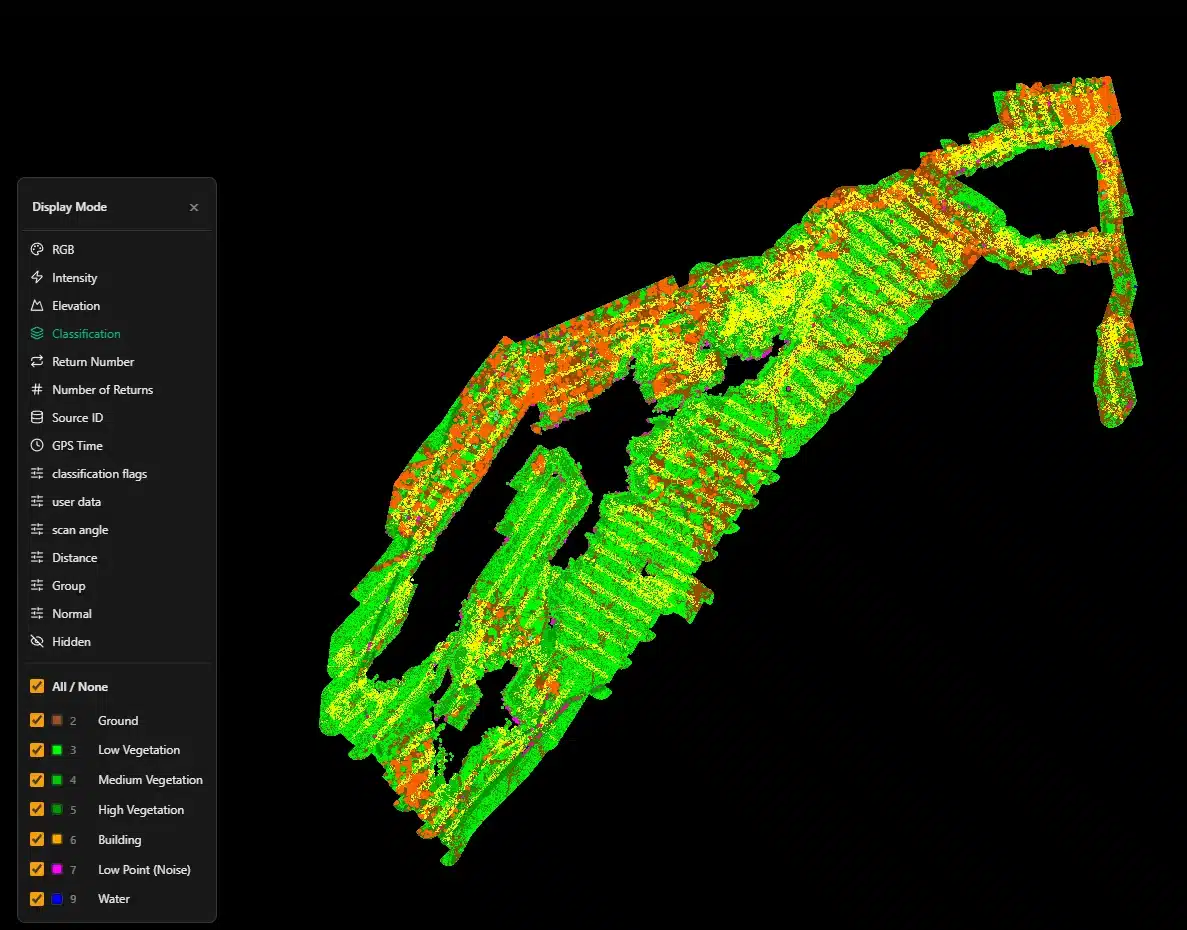
Drone LiDAR Survey points by Reflectivity