
Table of Contents
Why We Use AirData to Manage Our Fleet
Running a commercial drone operation means keeping track of a lot of moving parts – flight hours, battery cycles, maintenance schedules, insurance records, and regulatory compliance documentation. When you’ve got multiple aircraft flying across different sites every week, that paperwork adds up fast.
We’ve used AirData since the early days of Drone Services Ireland, and it’s become one of those tools that’s so embedded in our daily workflow that I forget not everyone knows about it. Here’s what it does and why it matters for professional drone survey operations.
What AirData Actually Does
AirData is a cloud-based platform that automatically syncs flight logs from your drone controller and organises them into a searchable, analysable database. Every time we complete a flight – whether it’s a topographical survey in Meath or a roof inspection in Cork – the flight data uploads automatically.
That data includes:
- GPS track and altitude profile for every flight
- Battery voltage, temperature, and discharge curves across each cell
- Motor performance data – current draw, temperature, and any anomalies
- Environmental conditions – wind speed, satellite count, signal strength
- Total flight time and distance per aircraft and per pilot
How It Helps With Compliance and Safety
Under EASA and IAA regulations, commercial operators need to maintain detailed records of every flight. That includes pilot logbooks, aircraft maintenance logs, and incident records. AirData handles most of this automatically.
The platform flags when a battery is degrading – you can see the discharge curve flattening over time, which tells you it’s time to retire that pack before it becomes a safety issue on site. It also tracks total flight hours per aircraft, so you know when scheduled maintenance intervals are due.
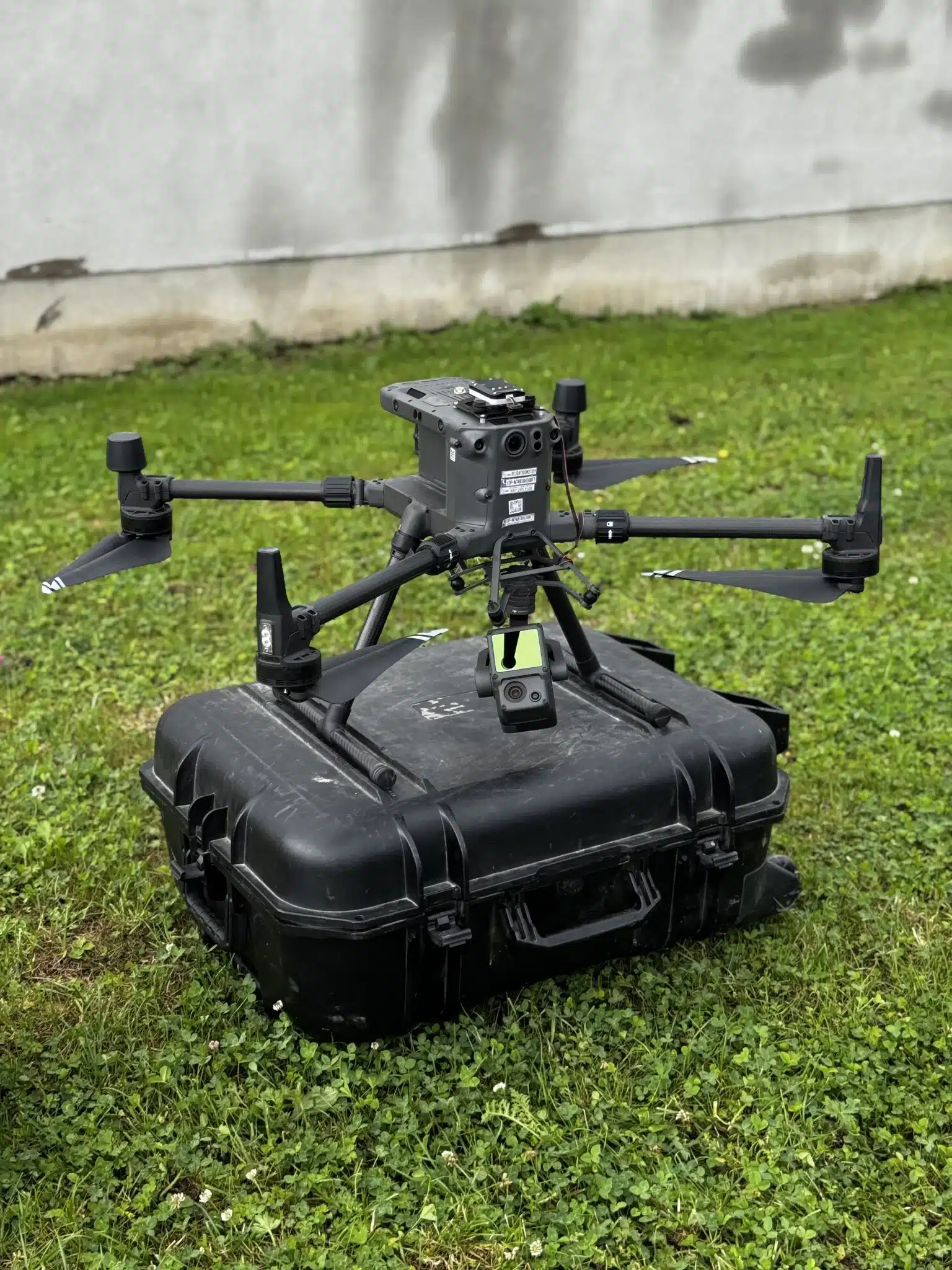
For our fleet of DJI M300 RTK and Matrice 4 Enterprise aircraft, this is particularly useful. These are expensive platforms carrying LiDAR sensors and survey-grade cameras worth tens of thousands of euros. Catching a motor issue early through trend analysis is worth far more than the cost of the platform subscription.
What We Use It For Day-to-Day
Client Reporting
When a client asks for proof of flight details – location, time, altitude, duration – we can pull a flight report in seconds. This is especially useful for insurance-related work and local authority projects where documentation standards are strict.
Battery Management
We run dozens of intelligent flight batteries across our fleet. AirData tracks each one individually by serial number, monitoring charge cycles, voltage sag, and cell balance. When a battery starts showing signs of degradation, the platform flags it before it becomes a problem in the field. On a cold January morning in Ireland, that’s the difference between a safe flight and an unexpected landing.
Pilot Logbooks
Every pilot at Drone Services Ireland has their flight hours automatically logged and categorised. When it’s time for licence renewals or when clients request proof of experience for tender submissions, the data is already there – accurate, timestamped, and verifiable.
Fleet Utilisation
Looking at the aggregated data across our fleet tells us which aircraft are being used most, which sites generate the most flight time, and where our operational patterns are. That informs decisions about equipment investment and scheduling.
Is AirData Worth It for Other Operators?
If you’re flying commercially and not tracking your flight data in a structured way, you’re creating a compliance risk. AirData’s free tier covers up to 100 flights, which is enough for occasional operators to get started. The paid plans scale from there.
For operators running regular construction monitoring, inspection work, or survey operations, the time savings on record-keeping alone justify the cost. The safety benefits of automated maintenance tracking are a bonus.
If you’re considering setting up your own drone operation, our post on questions to ask before hiring a drone operator covers what professional operators should have in place – fleet management tools like AirData are part of that picture.
Need a Professional Drone Service?
Drone Services Ireland are EASA-certified, IAA licensed operators with 500+ projects completed across all 32 counties. Get a free consultation today.