
Table of Contents
How often should you fly, and what goes in the report?
Construction projects are messy. Multiple work fronts, overlapping trades, weather delays, programme changes. Traditional progress reporting relies on site diaries and ground-level photos, which give you a fragmented view of what’s actually happening across the site.
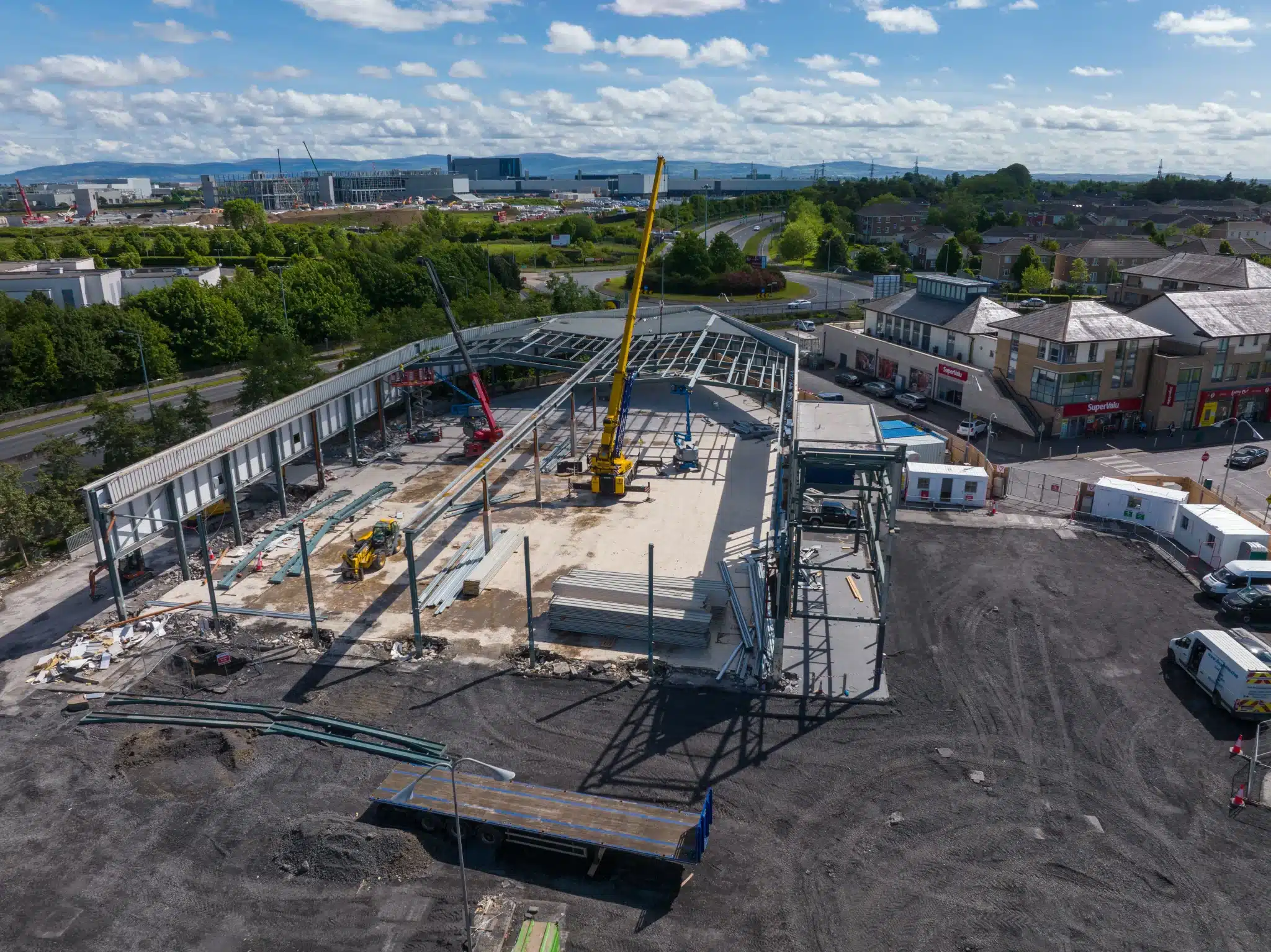
Drone construction progress monitoring captures everything in a single visit. a comprehensive, measurable, timestamped record for programme management, stakeholder reporting, and contract admin.
What should be in a drone progress report
1. Orthomosaic site plan
The main event. A georeferenced aerial photograph of the entire site on the survey date. One image shows:
- Current state of all work areas
- Plant and material positions
- Access routes and compound layout
- How active works relate to the surrounding area
Delivered as a GeoTIFF at 1.5 to 3 cm/pixel, it works in GIS software, overlays on design drawings in Civil 3D, or prints as a scaled PDF for site meetings.
2. Comparison with previous surveys
This is where the real value sits. Side-by-side orthomosaics from consecutive months immediately show:
- Where work has moved forward
- Where nothing’s changed (potential delays)
- New work fronts that have opened
- Temporary works put up or taken down
For earthworks, surface comparison produces colour-coded depth-of-change maps showing exactly how much material moved and where.
3. Volume and quantity tracking
On earthworks-heavy projects, each survey should include:
- Volume cut and filled since the last survey
- Cumulative totals since project start
- Remaining volume to complete (current vs design)
- Percentage done against bill quantities
This feeds straight into payment certification and programme forecasting.
4. Programme overlay
Lay the Gantt chart activities over the site plan and you can see whether physical progress matches the planned sequence. Zone-by-zone planned vs actual comparison helps project managers spot programme risks before they become critical.
5. 3D model and point cloud
A 3D point cloud and surface model for each survey gives you measurable data behind the visuals. Engineers can pull sections, check levels, and verify dimensions from the office instead of requesting another site visit.
6. Annotated observations
Where relevant, flag what’s visible:
- Standing water or drainage issues
- Erosion or slope problems
- Stockpile locations and rough quantities
- Compound and welfare positions
- Environmental controls (silt fences, settlement ponds)
How often to survey
Weekly
For fast-moving projects. large earthworks in full swing, structural concrete, tight milestones. Common on major projects during peak phases.
Fortnightly
When weekly is too much but monthly misses too much change. Works well for medium-scale housing, road improvements, and commercial builds during active construction.
Monthly
The most common frequency. Lines up with interim payment certs and monthly progress reporting. Suits most civil and building projects at normal pace.
At milestones
Some projects work better surveying at programme milestones. substructure complete, ground floor slab, roof level. rather than fixed intervals. Common on building projects where the monthly change might not justify a fixed schedule.
As needed
One-off surveys for dispute resolution, claims, or documenting specific events. after a storm, an unexpected find on site, or to record conditions at a particular point. Our storm damage service handles rapid response for weather events.
Cost
Regular monitoring gets cheaper per visit because mobilisation cost spreads across the programme. A contracted monthly schedule over 12 months is significantly cheaper per survey than ad-hoc individual bookings. See our pricing guide.
For projects running 6 months or longer, we offer fixed-price programmes with agreed frequency, standard deliverables, and a dedicated project manager.
Who uses the reports
- Project managers: programme tracking, resource planning
- Quantity surveyors: payment certs, cost control
- Design engineers: design verification, as-built checks
- Client reps: stakeholder reporting, governance
- H&S: site layout verification, hazard identification
To set up monitoring for your project, get in touch with site location, duration, and reporting needs. More on our construction monitoring service.