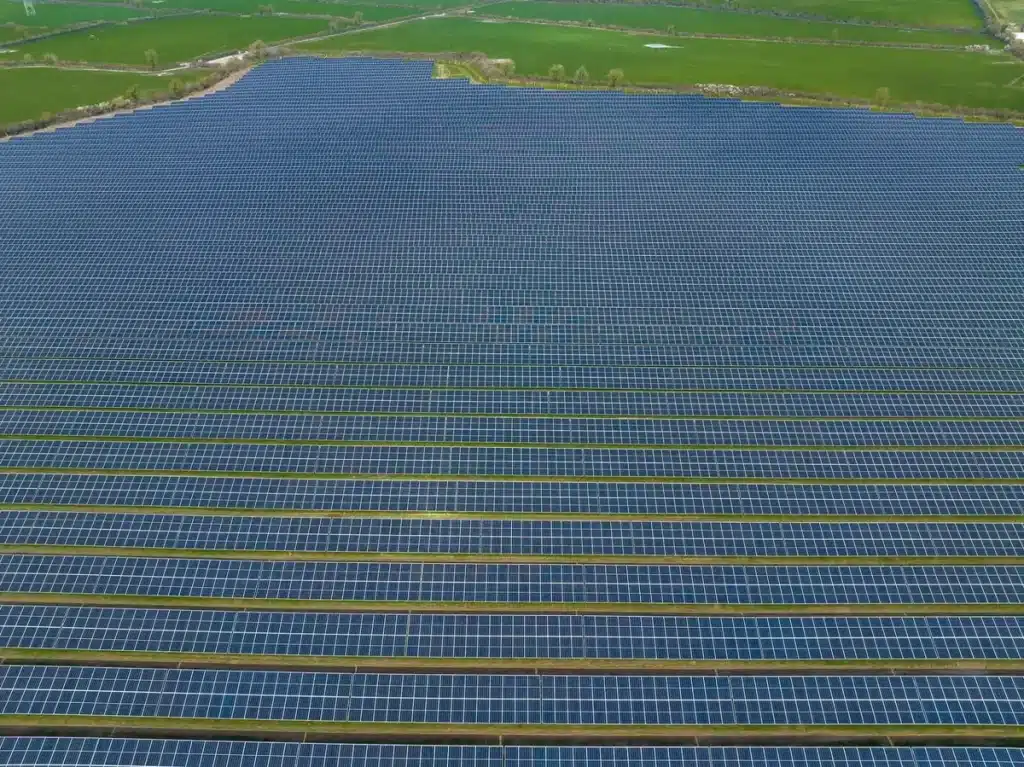
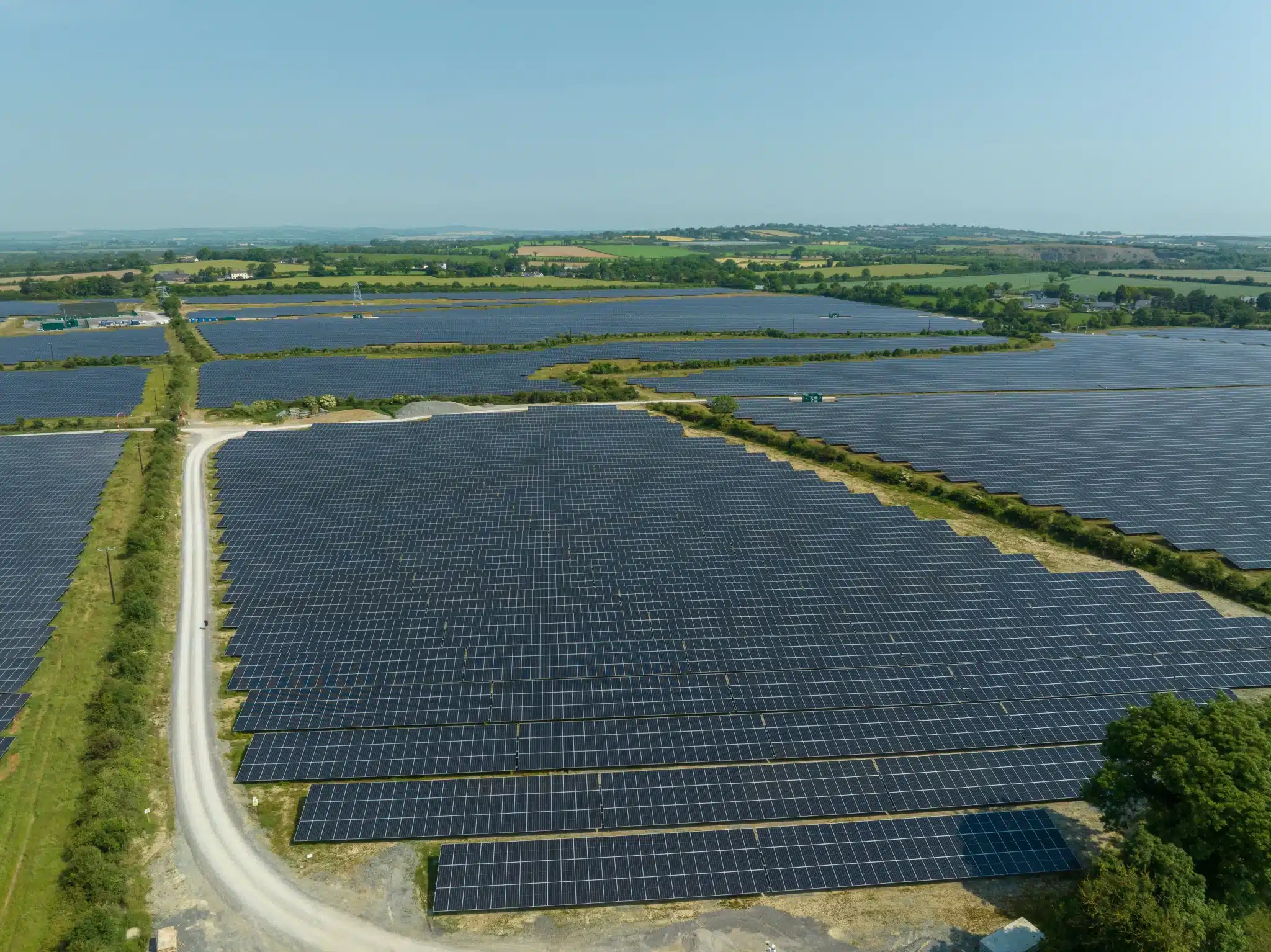
Thermal and visual drone inspection of solar PV arrays and rooftop installations. Identify underperforming panels, electrical hotspots, and physical defects across large sites – faster and more comprehensively than any ground-based method.
Inspection pricing from €800 per day
Last updated: April 2026
Every inspection produces a full dataset for performance benchmarking, maintenance planning, and insurance or warranty documentation.
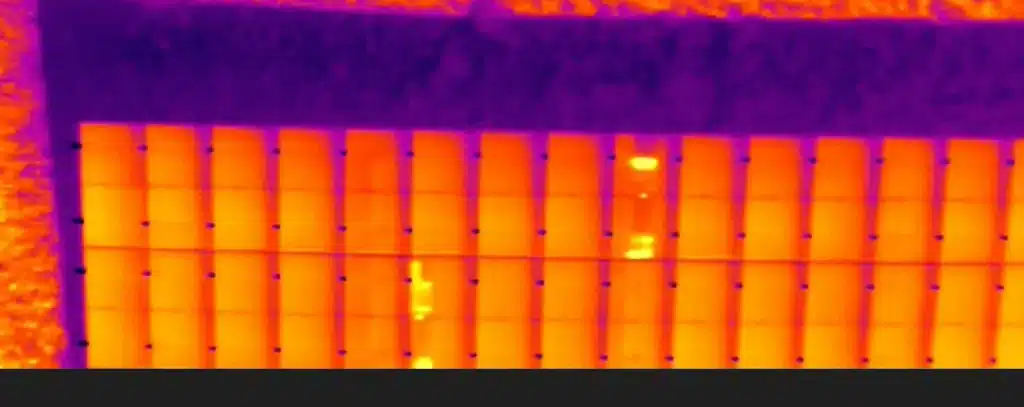
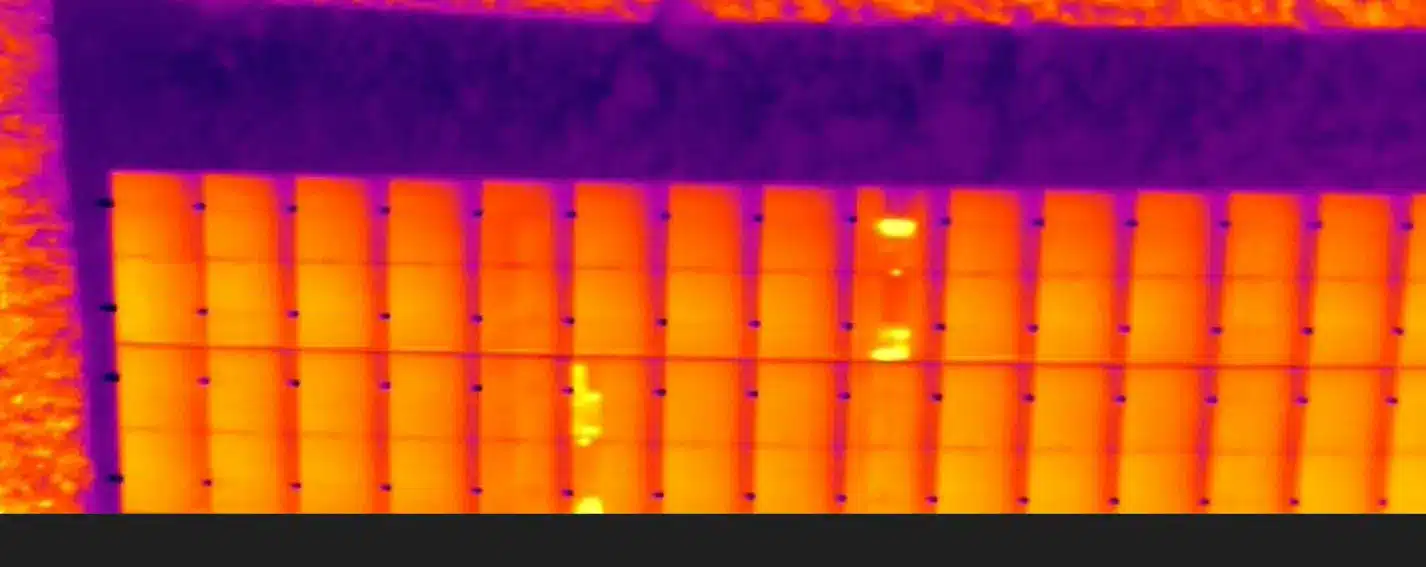
Radiometric thermal maps of the entire array identifying every underperforming cell, string, or module with precise GPS coordinates and temperature delta readings.
High-resolution photographs of every physical defect: cracked panels, glass delamination, soiling, bird or pest damage, and mounting hardware issues.
Thermal overlay mapped to electrical string layouts to identify string faults, open circuits, bypass diode failures, and inverter-level anomalies.
Georeferenced orthomosaic of the full site with panel-count verification, site boundary mapping, and overlay of thermal anomaly locations.
Identification of encroaching vegetation, shading obstructions affecting output, and growth under panel arrays that may impact drainage or mounting.
Prioritised defect register with severity classifications and recommended intervention sequence to maximise generation output and asset longevity.
We inspect commercial rooftop installations, agricultural solar arrays, and large ground-mount solar farms. Same EASA-certified pilot, same radiometric thermal camera – scaled to your site.
A structured two-pass survey that captures every panel thermally and visually, regardless of array size.
Before arrival we review site layout, panel specifications, and inverter configuration. On-site we conduct a pre-flight safety check, identify exclusion zones, and plan the flight grid to ensure 100% panel coverage with sufficient image overlap for thermal stitching.
The primary pass uses the Zenmuse H20T radiometric thermal camera, flown at consistent altitude in a lawnmower pattern during peak irradiance conditions (minimum 600 W/m²). Every panel is captured as a radiometric TIFF with temperature data embedded for post-processing analysis.
A second pass at lower altitude captures high-resolution visual imagery of any panel flagged in the thermal scan, plus a general visual survey of the full array, perimeter fencing, inverter housings, cable management, and site access infrastructure.
Thermal data is processed into a georeferenced anomaly map with each defect classified by severity (cell hotspot, module fault, string fault, or inverter fault). The final report includes the anomaly map, defect register, HD visual evidence, and a recommended maintenance priority list – delivered within 48 hours.
From panel-level thermal hotspot detection to full-site orthomosaic mapping – every deliverable is georeferenced and ready for your asset management system.
Thermal and visual drone inspections of solar farms across Ireland.


EASA-certified, comprehensively insured, and equipped with specialist thermal hardware that makes a measurable difference to inspection quality.
Everything you need to know about our drone solar farm inspection service.
We inspect installations of all sizes – from single rooftop PV systems on commercial buildings to ground-mount solar farms of several hundred megawatts. Flight planning and pricing scales with array size. Contact us with your panel count or site area for a tailored quote.
Thermal solar inspections require minimum solar irradiance of 600 W/m² and should be flown between 10am and 2pm on clear days. In Ireland this typically means May through August offers the most reliable survey windows. We monitor forecasts and schedule flexibly to capture suitable conditions.
Thermal imaging detects cell-level hotspots caused by bypass diode failures, cracked cells, and partial shading – all of which look visually normal but show measurable temperature differentials under load. String faults and inverter issues also produce distinctive thermal signatures not visible to the eye.
Yes. Our reports include georeferenced defect locations, temperature readings, and HD photographic evidence. This format is accepted by most insurers and asset managers for claim documentation and planned maintenance scheduling.
Yes. Many solar developers commission a combined thermal inspection and topographic survey in a single mobilisation, reducing overall cost. We can also include LiDAR data for terrain modelling if required for planning or expansion purposes.
EASA-certified drone pilots, radiometric thermal cameras, and 2-day report turnaround. Tell us your site size and we’ll provide a fixed-price quote within 24 hours.
Tell us about your project and we’ll respond within 24 hours with a detailed quote.
Get a fixed-price quote within 24 hours. No obligation, no hidden costs.